



Breakthrough Science and Advanced Space Technology Concepts
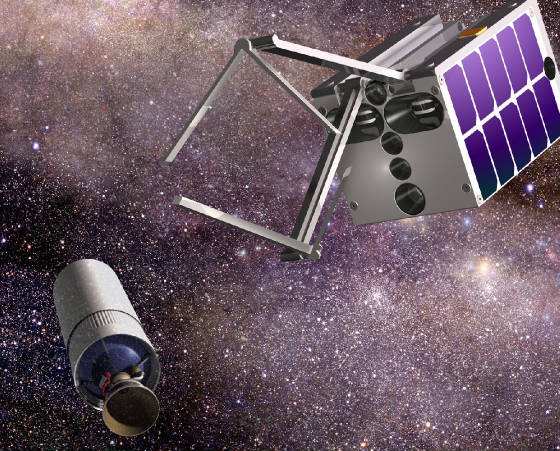
Image Obtained from Star Technology and Research, http://www.star-tech-inc.com.
The presenters on this Track describe innovative and breakthrough developments in propulsion science, the physics and chemistry of electromagnetic communications and electrified media, and human factors which promise to reduce the known barriers to both space resource utilization and humans of all walks of life living and working in space near and far. The concepts presented may also systematically lead to unexpected improvements for life on earth. Presenters may demonstrate an unusually improved understanding of a natural process or insight into an existing technology that may lead to rapid development and deployment of such a critical space technology. The concepts presented here may be speculative (technology readiness levels of a low order), but are based on or drawn from systematically collected data and/or a working knowledge that has not been previously developed to the extent represented here.
Preliminary Agenda and Scheduled Speakers
| Thursday: Room: Mykonos (2nd Floor) |
| Time: 10 am - 10:15 am |
 Speaker:Bill Gardiner, Laboratory Consulting Sources, Inc. Presentation Summary: |
| Time: 10:15 am am - 10:50 am |
|
Speaker:Joe Carroll, President, Tether Applications, Inc. Presentation Summary: "The utility of Low Earth Orbit (LEO) is increasingly threatened by small but lethal "shrapnel,"� most of which will be created by collisions between ton-class objects. The chance of such collisions is now 6%/year. Seriously reducing future losses in LEO will require avoiding or removing most such shrapnel, and preventing most large-object collisions. The 1972 Convention on International Liability for Damage Caused by Space Objects specifies strict liability for all damage caused to other states in the air or on the ground, but "reliability based on fault" for damage elsewhere. That may encourage clean-up options that minimize uncontrolled reentries. One option is to capture most large debris at congested altitudes (~750-1000 km) and assemble it into tethered scrapyards near 700 km. This could radically reduce collisions, while also collecting ~2000 tons for potential recycling in orbit. Over 70% of the mass in LEO is Russian, and the US has the most LEO assets at risk, so it may make sense to collaborate on collection and perhaps even recycling. The EDDE vehicle, now under development under NASA funding, could play key roles, capturing and moving debris, handing it off to tethered scrapyards, and delivering beneficiated mass to customers. It may even make sense for EDDE to collect Russian debris in return for ownership of some scrapyards. A key question is: can ~2000 tons of "Very Near Earth Objects," already well-characterized and in LEO, be a profitable test case for commercial processing and sale of extraterrestrial materials? |
| Time: 10:50 am - 11 am |
| Break |
| Time: 11 am - 11:50 am |
 Speaker: Keith Lofstrom, Server Sky, http://server-sky.com Presentation Summary: Presentation Summary: Server sky is a proposal to build large arrays of millions of 5 gram paper-thin computer satellites and launch them into 6400km earth orbit. Thinsat arrays use unlimited space solar power, and operate outside the biosphere, keeping the megawatts in the arrays while transmitting watts of signal to the ground. Arrays act as internet data centers and sparse phased array antennas, transmitting thousands of pencil-thin communication beams simultaneously to ground receivers and other arrays in space. We've made a lot of progress since ISDC 2010. Aluminum substrates, low-interference geodesic arrays, self-deploying stacks, improved manufacturability and radiation hardness, and other steps towards ten dollar satellites. Please join us and learn how modern semiconductor manufacturing and Moore's law will drive rapid exponential growth in space. |
| Time: 12 pm - 2 pm |
| Lunch |
| Time: 2 pm - 2:50 pm |
|
Speaker:Bill Gardiner, Laboratory Consulting Sources, Inc. Presentation Summary: |
| Time: 2:50 pm - 3 pm |
| Break |
| Time: 3 pm - 3:50 pm |
 Speaker:Narayanan Komerath Presentation Summary: |
| Time: 3:50 pm - 4 pm |
| Break |
| Time: 4 pm - 4:50 pm |
|
Speaker:Bill Gardiner, Laboratory Consulting Sources, Inc. Presentation Summary: |
| Time: 4:50 pm - 5 pm |
| Break |
| Time: 5 pm - 5:50 pm |
 Speaker: Marshall Barnes, Director, R&D and Marketing AET RaDAL Presentation Summary: |
| Friday: Room: Athenia (2nd Floor) |
| Time: 3 pm - 3:50 pm |
|
Presentation Title: EDDE: A Revolutionary Spacecraft to make Living in Space Affordable and Safe
Presentation Summary:  |
| Time: 3:50 pm - 4 pm |
| Break |
| Time: 4 pm - 4:50 pm |
|
Presentation Title: Sunjammer: A Solar Sail Demonstration
Presentation Summary:  |
Speaker's Bio
William W. "Bill" Gardiner (Track Chair)
Bill Gardiner has been a member of the National Space Society and the
predecessor L-5 Society since 1975 when he discovered the efforts of
Princeton University Physics Professor Gerard O�Neill to develop a
grand new plan to settle outer space . He has served as the Southeast
Regional Board member three times and currently is Secretary of the
National Society, member of the Executive Committee, chair of the NSS
Roadmap committee and co-founder of the Breakthrough Science and
Technology Committee (BS&T). His involvement with the the NSS is based
on his belief that it is the only internationally based non-governmental
organization capable of generating general solutions to our global
challenges. In the early years (1978 � 1992) he was an intermediary
between the affiliated Space Pac to Newt Gingrich, his Congressman
during that period. In December 1991 Newt initiated a conference call
with Bill�s local NSS Atlanta chapter which had previously arranged a
telephone meeting with Cosmonaut and Supreme Soviet member Vladimir
Dzhanibekov while he was in Toledo, Ohio for an attempt at a high
altitude balloon flight. With Bill�s nine-year old son and fifth grade
class on one phone, Newt on another and the cosmonaut on the third
phone, Newt, having been a key proponent of the Space Defense
Initiative (SDI), made reassurances to the cosmonaut about our peaceful
intentions and offered assistance in getting FAA clearance for the
balloon flight. Less than two weeks later the old Soviet Union �closed
for business.� In 2011 Bill received an NSS Award for Exceptional
Service. In the twenty-one years since then Bill has been working on
moving beyond the legacy of the Cold War thinking of �flags and
footprints� space policy. As part of his research and development
efforts at Analytech, his family owned environmental laboratory business
in Jonesboro, Georgia , he and his associates have been developing a
fresh start in energy development, environment, health and nutrition. He
refers to this effort as �Living in the Heavens as a Model for Living on
Earth.� Since 2006, he has chaired forums and panels promoting the
ideas and their creators of forward-thinking concepts that have the
potential for dramatically advancing the US economy as a spacefaring
society. Bill lives with his wife Amparo of 32 years in Jonesboro,
Georgia and has four adult children and two grandchildren .
rev. may 22





Special thanks to our Sponsors, Co-Sponsors, Exhibitors, Supporters and Affiliates.